
Have you ever held onto someone in your business longer than you should have — a team member, a client, a supplier, even a friendship — because you didn’t want to upset them?
If you’ve been wondering how to stop being a people pleaser in business — without feeling like a cold, ruthless monster — you’re going to like this. Because the answer isn’t to stop caring. It’s something much subtler.
If yes, you’re not alone. And it’s almost certainly costing you more than you realise.
Most owners I work with are people-pleasers at heart. It’s part of why they’re good at what they do. They notice how others feel. They want people to be okay. They put themselves last regularly. They don’t enjoy being the bad guy.
And then their business quietly fills up with relationships that should have ended six months ago — and they wonder why they feel resentful and tired all the time.
That’s not weakness. It’s how care works when you don’t have a way to set it down at the right moment.
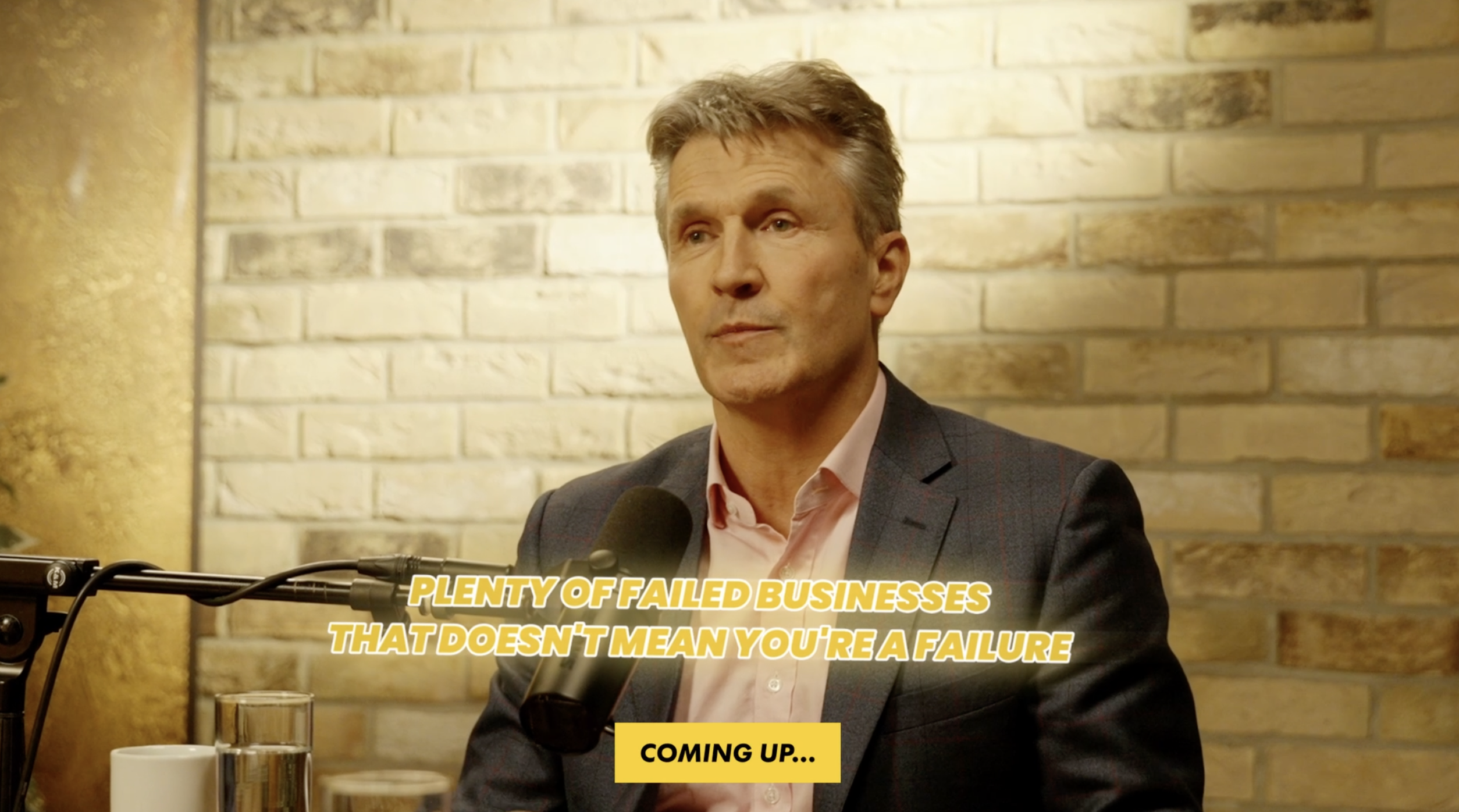
This week’s podcast guest, Martin Lockyer, has lived a different version of it.
Most coaches I know struggle to teach owners how to stop being a people pleaser in business because it sounds like a personality change. Martin shows that it isn’t.
There’s a moment about halfway through my conversation with Martin where I get brave and ask the question every business owner secretly wants the answer to.
“How did you get over needing to be liked?”
Martin pauses. He doesn’t pretend he got over it.
“I didn’t,” he says. “I just accepted I’m not responsible for it.”
Read it twice. There’s a world of difference between those two answers.
Martin Lockyer is the co-founder of Westminster Wealth, one of the UK’s top-ranked independent financial planning firms. He has been in financial services for 36 years. His firm manages over £3 billion. The Financial Times has put it in the top 100 firms in the UK for the last decade and a half, sometimes as high as fourth.
He has been approached by American and Swedish private equity firms wanting to buy him out. He has turned them all down. Not because the cheques weren’t good. They were “pretty big sums.” He walked because the model they wanted to install would have killed the independence the firm has been built on for 25 years.
That kind of self-discipline doesn’t come from technical brilliance, or from market timing, or from any of the things business books usually credit. It comes from one mindset shift Martin made years ago and lives by every day.
He stopped trying to control how other people feel about him.
The recovery line that became an operating principle
Martin is 24 years sober this year. He’s open about it. And he is candid that the philosophy that built his business came from the language of recovery.
The phrase he uses, repeatedly, is “keep your side of the street clean.”
It means: I’m responsible for my actions, my intentions, how I show up. I am not responsible for what people make of those actions, or for the outcomes the market chooses to reward.
When you really hear that, it does something useful to your nervous system.
You stop trying to manage everyone’s perception of you. You stop having two-hour conversations in your head with people who aren’t there, defending decisions they haven’t actually criticised. You stop softening difficult conversations to keep the relationship warm at the cost of the truth.
You also stop blaming yourself for outcomes that were never under your control to begin with. The recession that hits your sector. The client who decides to take the work elsewhere despite excellent service. The brilliant team member whose own family circumstances force them to leave. Those weren’t yours to control. Trying to be responsible for them is what burns owners out.
The job, Martin says, is to keep your side of the street clean and trust the rest.
How to stop being a people pleaser in business: three places it shows up
This sounds soft. It isn’t. Three places it shows up in Martin’s business.
The PE story. When you’ve spent 25 years publicly saying you’re “independent” — to your clients, your team, the FT, every conference stage — going back on that for money is corrosive. Not because of what people will say. Because of what it does to you. Martin walked because he could not look at his own face in the mirror if he became the thing he’d spent two decades being against. That isn’t ego. That’s the operating principle in action. He kept his side of the street clean.
Values-first hiring. Martin would rather employ a £300,000-a-year fee earner who shares the firm’s values than a £1m-a-year fee earner who doesn’t. He says this with no flinch. In a business that runs on individual revenue numbers, this is heretical. He has fired three or four planners in the last year, some doing decent business, because the values weren’t there. Every one of them walked into a new job within weeks. The sector absorbed them. The firm got cleaner. He didn’t apologise for the choice. He didn’t lie awake worrying that people would think he’d been ruthless. He kept his side of the street clean.
Forward recruiting. He hired a full-time compliance officer when the firm was turning £2.5m. Peers were outsourcing the role. He hired a chartered-accountant FD at £4.5m turnover. People told him to wait. He didn’t. Yes, it cost him short-term margin. What it bought him was freedom and resilience and senior hires who joined when he was choosing, not panicking. Side of the street, clean.
The conversation you’ve been avoiding
There’s almost always one. It might be the pricing conversation with the long-term client. It might be the performance conversation that should have happened in March. It might be the conversation with the team member whose attitude is poisoning the others.
Martin has a story about a £50,000 betrayal early in his career. A friend of more than a decade let him down for a serious sum of money. He saw the signs months before it happened. He knew something was off. He couldn’t bring himself to have the conversation, because he loved the man.
The lesson he draws isn’t about trust. It’s about denial.
The cost of avoiding the conversation was £50,000. The cost of having it would have been an evening of discomfort.
Almost every owner I coach is sitting on a conversation like this right now. Not a £50,000 one, but the principle is the same. They’re avoiding it because they’re trying to control how the other person will feel about them when they hear what they’ve got to say.
That isn’t your job.
Your job is to keep your side of the street clean. Have the conversation. With care, with preparation, with humanity. Then let the other person have whatever feelings they’re going to have about it.
What this looks like for you this week
Pick the conversation you’ve been avoiding. Just one.
Ask yourself honestly: what are you actually afraid of? Nine times out of ten, you’ll find the answer is some version of “I don’t want them to think badly of me.”
That’s the trap.
You’re not responsible for whether they think badly of you. You’re only responsible for whether you handle the conversation with integrity.
Plan it. Prepare what you want to say. Get clear on the outcome you want.
Then have it.
Whatever they think of you afterwards is theirs to carry. Your side of the street is clean.
That’s what Martin Lockyer means when he says he’s not responsible for whether you like him.
And it’s why his firm is what it is, 25 years on.
Here’s the real truth about how to stop being a people pleaser in business: you don’t stop being kind. You stop being responsible for other people’s reactions to your kindness. There’s a world of freedom in that line. (If you’d like a structured way to spot where this pattern is costing you, my Upgrade Audit walks you through it in one focused session.)
Martin Lockyer is the guest on this week’s ActionCOACH Podcast.
🎵 Spotify: https://open.spotify.com/episode/65c7S39V3svATvPubqa5LX?si=KSFjOV15RSucd4yGhT1Igw
🎙️ Apple: https://podcasts.apple.com/gb/podcast/the-actioncoach-podcast/id1683102859?i=1000761737700
Want a 5-minute honest read on which corner of your business is leaking because of the conversations you’ve been avoiding? Take the Score Card Quiz.