
How to Take a Business Time-Out: The Founder Discipline That Actually Scales You
If you’ve had “I need to take a proper break” on your mental to-do list for six months and it keeps getting bumped, this one’s for you. Not the guilty half-day where you check email every hour. A proper, off-radar, phone-in-a-drawer break. The kind that actually resets you.
You probably won’t take it. I know. I coach owners on it every week and eight out of ten tell me the same thing: I can’t afford to. Not right now. Not this quarter. Maybe when things calm down.
Except things don’t calm down. And the reason they don’t calm down is exactly the reason you can’t take the break.
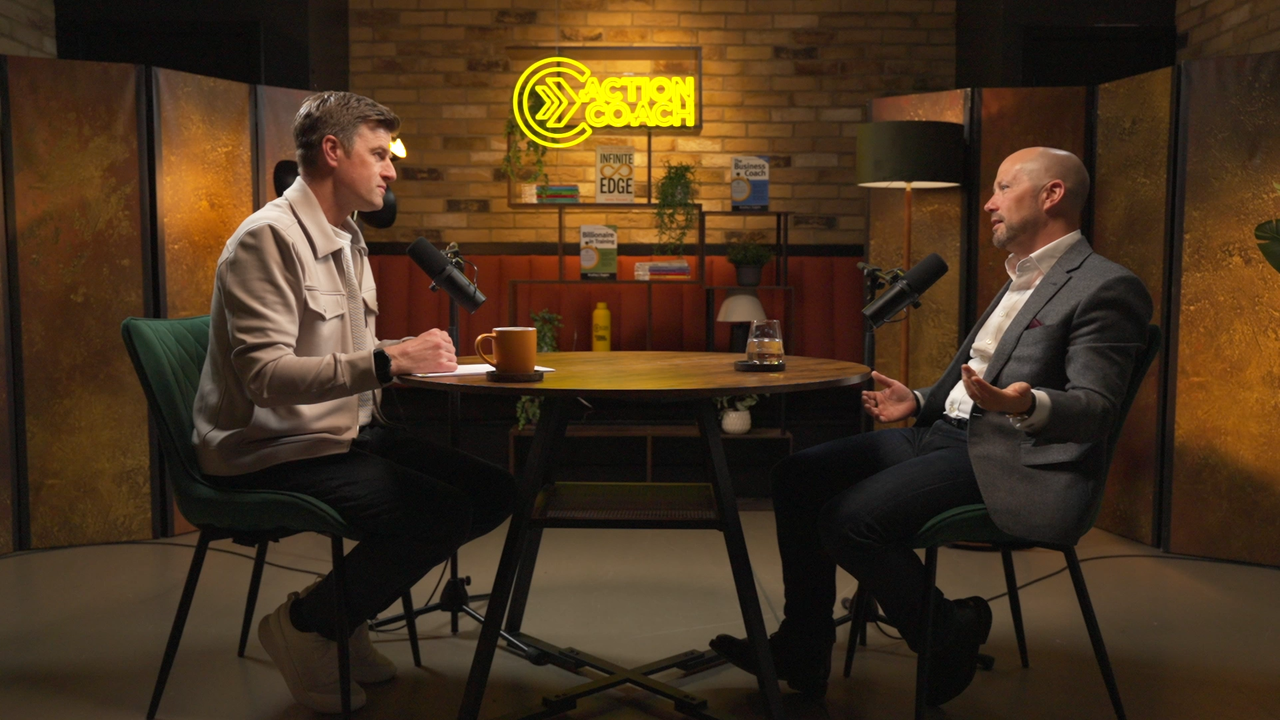
This week’s podcast guest calls it, more bluntly than I ever have: “the fastest way to speed up is to stop.” His name is Danny McFarlane and he’s spent 30 years as a financial planner to the ultra-wealthy, most recently with Westminster Wealth (yes, Martin Lockyer’s firm, from a few episodes back). He’s advised the people you and I would consider “made it.” And the discipline of stopping is the piece of advice he gives them that costs them the most to hear and pays back the most reliably.
If you’re the bottleneck in your business right now, this is the piece of the puzzle. How to take a business time-out isn’t a wellness bolt-on. It’s the load-bearing discipline behind every founder who scales past themselves.
Why the moment you feel you can’t stop is the moment you must
In the episode, Danny puts it flat. “One of the hardest things is having the discipline to go right, time out. And it’s always when you think you’ve got the least time to take that time out. And that’s when you absolutely need to take the time out.”
Read that twice.
The founders I coach who hit real ceilings are almost always the ones who’ve stopped taking the break. They used to. In year one or year three they had that habit of stepping out. Somewhere between £1m and £5m turnover, the business “needed” them so much that they stopped. And that’s the exact moment they became the bottleneck.
Not because the workload jumped. Because the reflection stopped.
Without it, you are not building a business. You are running one very expensive, very depreciating asset called “you at 100mph.”
How to take a business time-out that actually works
Danny is specific about this. His practice for decades: two to three times a year, on his own, two to three nights in a hotel, phone off, out of office, “if someone dies, call me, otherwise I’m off radar.”
If you’re reading this and thinking “well I take Saturday off,” that isn’t it. Saturday off with the family and one eye on Slack isn’t a time-out. It’s a slower Wednesday.
The three things that make a business time-out actually work:
- You leave the environment. Home is not off radar. Home is where the environment that made you the bottleneck lives. You have to physically remove yourself.
- You plan what you’ll cover before you go. Danny is clear on this. “You just rock up with a bit of paper and a pen and go… what am I doing again?” That’s a failed time-out. Go with two or three big questions written down.
- You genuinely disconnect. Phone off, email out-of-office, staff briefed. He uses an app called Forest to lock his apps for a set number of hours. Belt and braces.
Do this once and you’ll feel guilty. Do it twice and you’ll feel the productivity return. Do it three times and it’s the habit that funds the rest of your year.
The question that turns a time-out into a strategy session
There’s a line from this week’s episode I want you to bookmark. Danny uses it every single time he steps out.
“What am I not doing now that I used to do that got me in a position where I am now?”
Sit with that.
Most owners at a plateau are not missing a new tactic. They’re missing an old habit. The reason things aren’t moving right now is almost always that the disciplines that got you to £2m or £5m have quietly fallen off in the last six months, and you didn’t notice.
The time-out is where you notice. Nowhere else works.
Stop comparing your bad days to their good days
Danny told a story in the episode that I want to share. When he was 23, first job, brand new to financial planning, there was a guy at his firm who was the top performer year on year. Danny would look at him and think, “it’s alright for him.” No clients. No money. It felt insurmountable.
You’ve had this feeling, right? Someone in your industry crushing it, and you’re thinking, well, they had the money or the network or the timing or the luck.
Danny’s line, 30 years later: “You’re comparing your lowlights to their highlights.”
They didn’t get there by having easier days. They got there by working through worse days than yours, and having the discipline to stop, reflect, and adjust. Which is the whole point.
Why this connects to how you spend the money too
The other thing Danny hits repeatedly is that business, work, money and life are all completely connected, and most successful owners work head-down without joining the dots. They hit £30m turnover doing exactly what worked at £10m. But now their kids are in different schools, their spouse has a different job, their number has changed, and the goal they’re grinding toward isn’t the goal they’d set if they took ten minutes to look up.
If you’ve been working toward a number you set five years ago, when your business, your family and your ambitions were all different, no amount of harder work is going to feel good when you get there. Because it isn’t the right number any more.
That’s what stopping is for. Not rest. Recalibration.
(If you want a structured way to see which corner of your business is currently being held back by decisions you made three years ago, my Upgrade Audit is one focused session that will surface them.)
What this looks like for you this week
Two moves, both small.
One: open your calendar right now and block one full day in the next 30 days as “off radar.” Don’t tell yourself what it’s for yet. Just block it. Discipline beats intention every time. Then, seven days before, decide the location (anywhere that isn’t your home or office), pack a notebook, and go.
Two: on that day, ask yourself Danny’s question. What am I not doing now that I used to do that got me here? Write down every answer that comes. Don’t fix it. Don’t action-plan it. Just get honest.
If you cannot find a day, then per Danny’s own rule, you don’t need a day. You need a week.
How to take a business time-out isn’t a soft skill. It’s the discipline that separates founders who scale past themselves from the ones who plateau, hire consultants, wonder why nothing shifts, and blame the market. The market didn’t change. You stopped stopping.
Stop being the bottleneck. Take the day.
Danny McFarlane is the guest on this week’s ActionCOACH Podcast.
P.S. Want a 5-minute honest read on which corner of your business is quietly holding you hostage right now? Take the Score Card Quiz.